Part III
Leadership and Team Management
Eleven techniques for leading people: how to run your team, put each person in the right role, care for them, handle conflict and power, make decisions and win the battles change requires.
Which technique for which situation?
| If… | Try |
|---|---|
| You’re not sure whether your team needs teamwork, competition, support or partnership | The Team Strategy MatrixUncover the best way to manage your team. |
| You must decide between hiring stars and building a cohesive team | The Manager’s DilemmaWhen given the choice, do you favor individual superstars or a cohesive super team? |
| You want to know whether you give each person too little or too much attention | The Care MeterGauge your adequacy in providing care for others. |
| You wonder whether someone is in the right job, team or organization | The Fitness RadarAssess whether the person you care for is in the right place. |
| You need to decide who should take which role, or see why a team is unbalanced | The Functional DominoDetermine the best-suited role for each person in your organization. |
| Disagreements pile up and you can’t tell which ones need you | The Conflicts StrainerIdentify and prioritize conflicts that truly require attention. |
| You want to see how you use power and influence, and adjust it person by person | The Power CirclesMaster the art of effectively blending various forms of power. |
| You want to know why people follow you and how far they would go | The Leadership TriangleAssess people’s unwavering willingness to follow you, even to the ends of the earth. |
| Your team makes decisions but can’t tell how good they are | The Decision CompassAssess and enhance the efficiency of your decision-making. |
| Your group decisions fall prey to bias and jumped conclusions | The Five Decision HatsMitigate the obstacles encountered when translating facts into actionable steps. |
| People resist the change you’re leading | The Resistance DragonsRecognize pivotal battles for impactful change. |
Technique 8
The Team Strategy Matrix
Uncover the best way to manage your team.
The Team Strategy Matrix checks whether a team's management strategy fits the team. It places the team on two dimensions, how much members depend on each other for their goals and how different their goals are, and points to one of four strategies: partnership, teamwork, support or competition, each with what the leader should focus on.
- Team Dynamics
- Collaboration Approach
- Management Strategy
Technique 9
The Manager’s Dilemma
When given the choice, do you favor individual superstars or a cohesive super team?
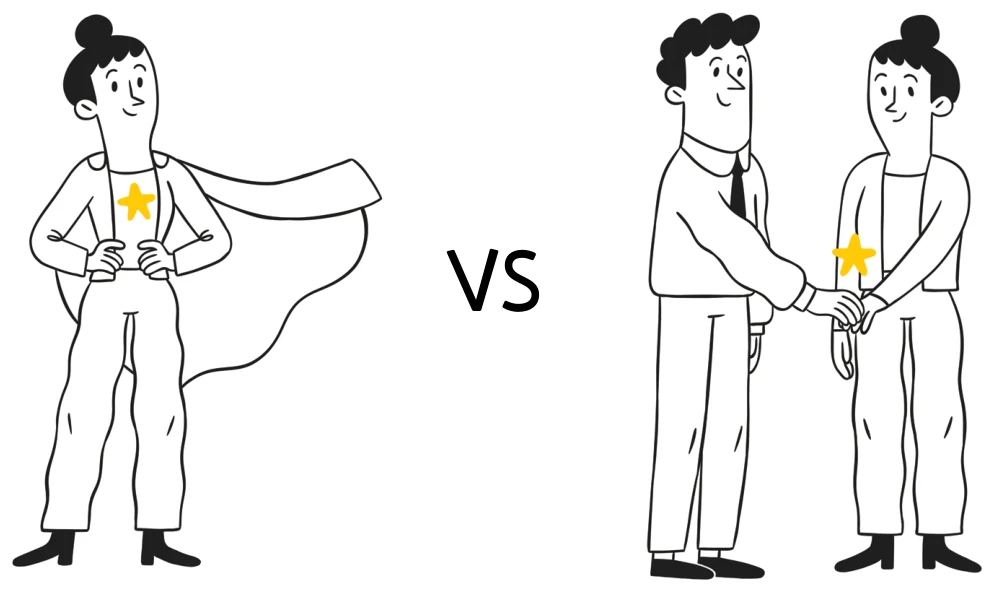
The Manager’s Dilemma helps a leader choose between a group of independent superstars and a cohesive super team. Estimate how much value comes from member interactions, then rate ten dimensions, five favoring superstars and five favoring super teams, from 1 to 10. The total, between -50 and +50, points to the better structure.
- Team Structure
- Individual vs. Collective Performance
Technique 10
The Care Meter
Gauge your adequacy in providing care for others.
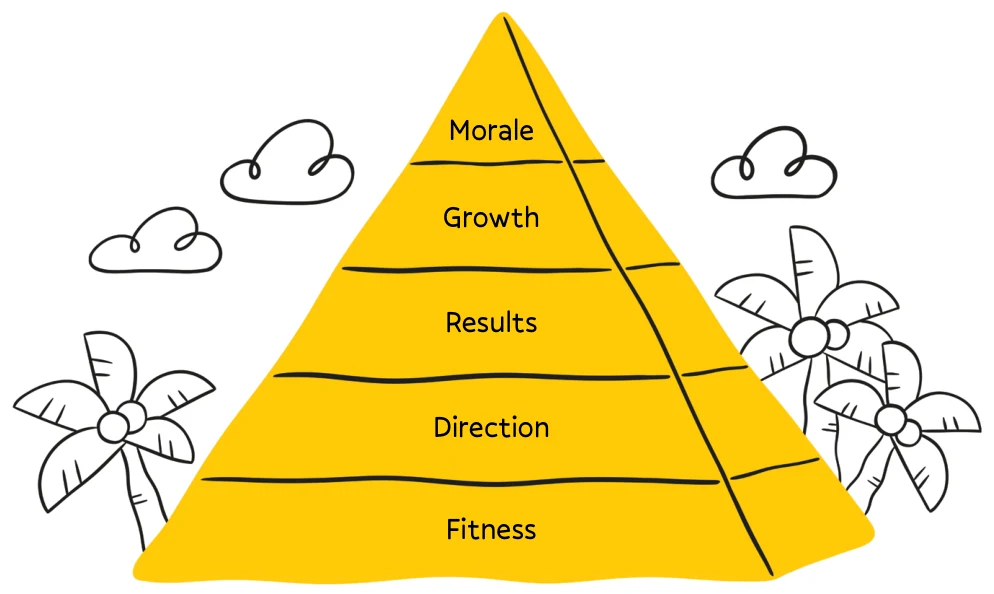
The Care Meter helps people managers give the right amount of care, neither too little nor too much. Care is organized in a Care Pyramid of Fitness, Direction, Results, Growth and Morale. Set a weekly threshold per person (six hours), track the time you actually spend, and divide to get a care coefficient; close to 1 is healthy.
- Leadership
- People Management
- Support
Technique 11
The Fitness Radar
Assess whether the person you care for is in the right place.
The Fitness Radar measures whether a person is in the right place at four levels of fit: Person–Organization, Person–Job, Person–Team and Person–Supervisor. With the 4-7 Technique the person names seven valued elements for each level; rating each from 1 to 10 gives four 0–1 scores, an overall fit score and a radar chart of misalignments.
- Role Alignment
- Organizational Fit
- Team Compatibility
Technique 12
The Functional Domino
Determine the best-suited role for each person in your organization.
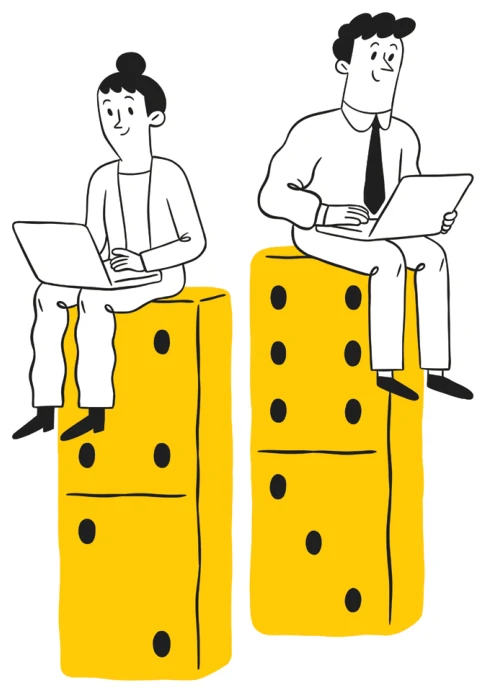
The Functional Domino shows how a person’s time splits across the five functions of the 5P Work Model, People, Processes, Products, Politics and Platforms, each dot worth 10%. Compared with standard dominos for Product Owner, Scrum Master and Developer, it shows which role fits best; it also exposes team imbalances and miscalibration.
- Role Definition
- Team Structure
- Skills Allocation
Technique 13
The Conflicts Strainer
Identify and prioritize conflicts that truly require attention.
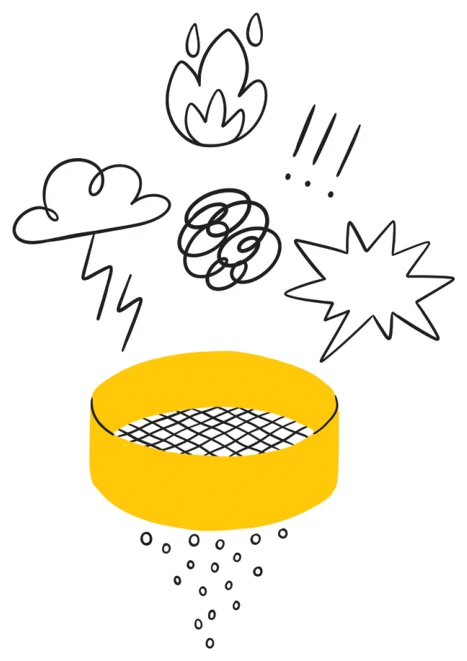
The Conflicts Strainer filters real conflicts from discussions, debates and conversations. It rates a disagreement on two dimensions, the degree of difference and the degree of dependence, and keeps attention on Type A conflicts, where both are high. These are then defused by reducing differences (Type X strategies) or reducing dependence (Type Y strategies).
- Conflict Resolution
- Team Dynamics
- Prioritization
Technique 14
The Power Circles
Master the art of effectively blending various forms of power.
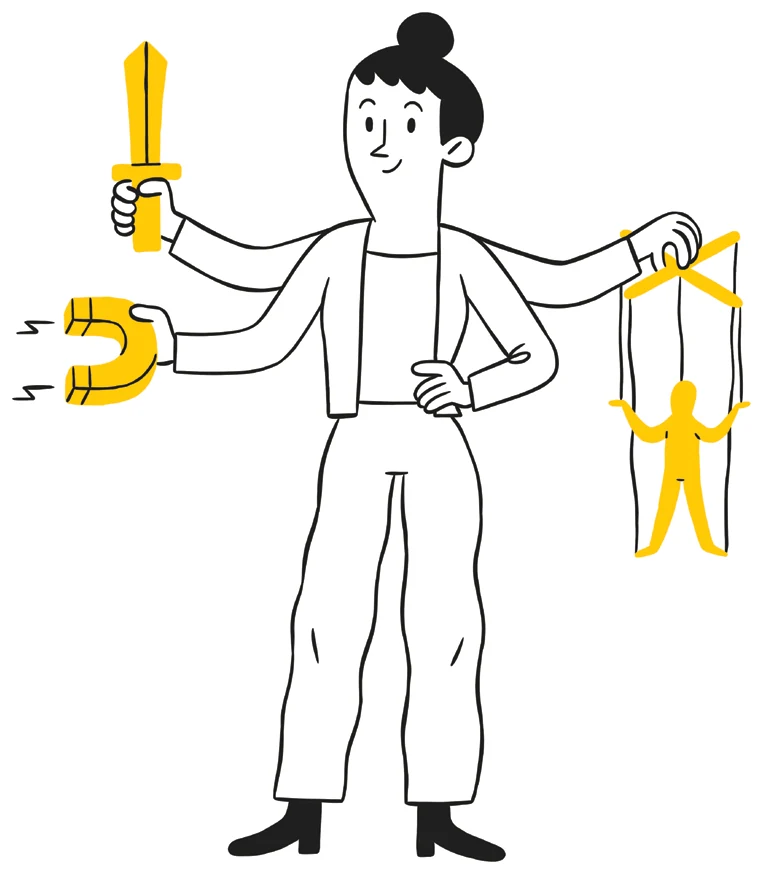
Power Circles map how a person uses power by splitting 100% among aggressive, cooperative and manipulative power, drawn as three concentric rings. Gather ratings from subordinates and peers, average them, then build a Power Map of your team to remind you which power style to use with each person.
- Influence
- Leadership Style
- Team Dynamics
Technique 15
The Leadership Triangle
Assess people’s unwavering willingness to follow you, even to the ends of the earth.
The Leadership Triangle shows why people follow you and how far they would go. Rate yourself from 1 to 10 on personality, vision and circumstance, plot the three ratings as a triangle, and read its size and shape to see how strongly you hold your followers and which dimension to develop.
- Followership
- Leadership Effectiveness
- Influence
Technique 16
The Decision Compass
Assess and enhance the efficiency of your decision-making.
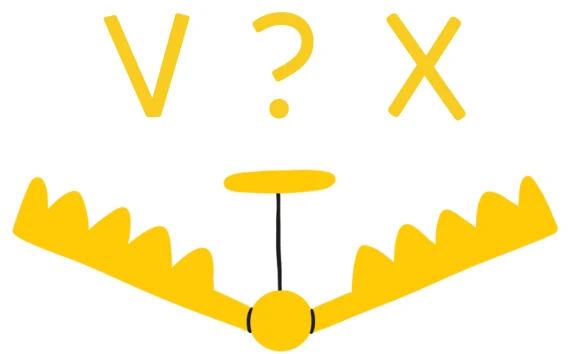
The Decision Compass measures how efficient a decision is. Rate it from 1 to 10 on four dimensions, cost, quality, commitment and anticipated impact, plot the ratings on a compass, and take the lowest rating as the decision’s efficiency score. Teams compare scores, agree on one and plan actions to raise it.
- Decision-Making
- Evaluation
- Consensus
Technique 17
The Five Decision Hats
Mitigate the obstacles encountered when translating facts into actionable steps.
The Five Decision Hats guard a group decision against five traps that distort how facts become actions, filtering, interpreting, gap-filling, concluding and evaluating. Each participant wears one or more hats, raises theirs when they spot their trap, and the group discusses it, records any accepted risk and weighs those risks in a final evaluation.
- Critical Thinking
- Bias Prevention
- Decision Quality
Technique 18
The Resistance Dragons
Recognize pivotal battles for impactful change.
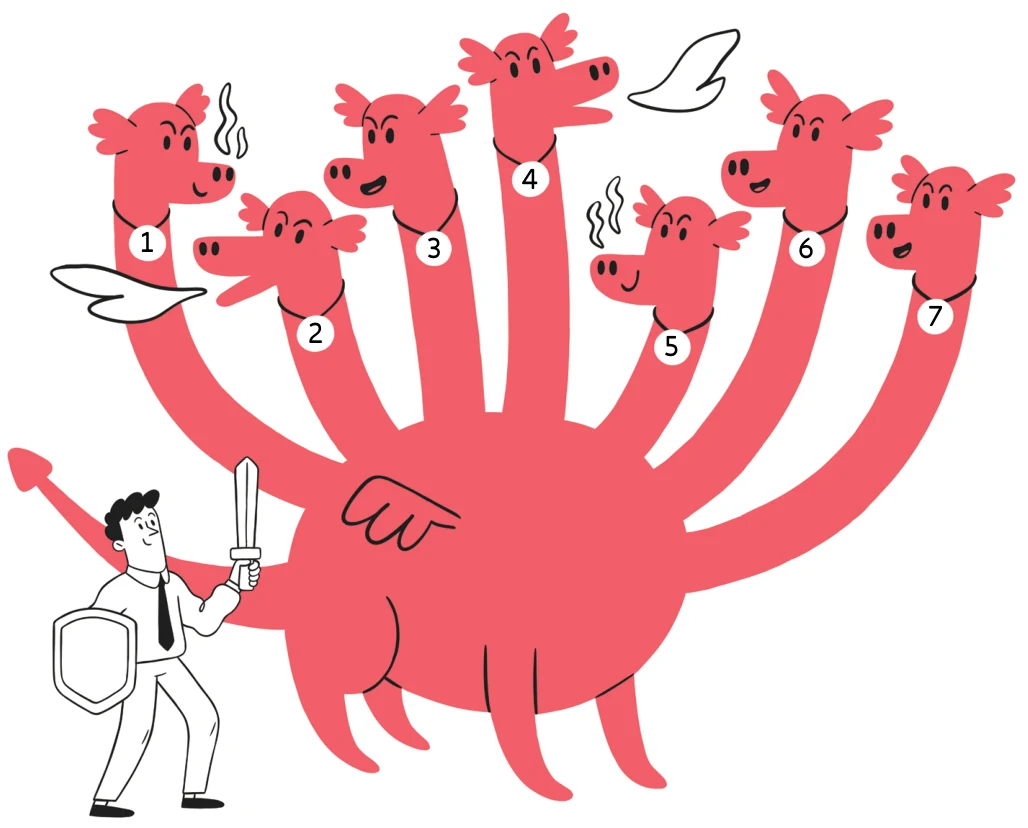
The Resistance Dragons separate two kinds of resistance to change. The Red Dragon is general aversion to any change, with seven heads such as change fatigue and disengagement; the Yellow Dragon opposes one specific change, with seven heads such as anticipated losses. Defeat the Red Dragon first, then cut off at least five heads of each.
- Change Management
- Transformation
- Resistance