Technique 11 of 31
The Fitness Radar
Assess whether the person you care for is in the right place.
- Role Alignment
- Organizational Fit
- Team Compatibility
In short
The Fitness Radar measures whether a person is in the right place at four levels of fit: Person–Organization, Person–Job, Person–Team and Person–Supervisor. With the 4-7 Technique the person names seven valued elements for each level; rating each from 1 to 10 gives four 0–1 scores, an overall fit score and a radar chart of misalignments.
For: People managers, in hiring and in role or team changes
The Problem
A Bulgarian saying goes, “A stone has weight when it’s in its place”—yet in corporate settings, alignment is often overlooked.1 Effective people management isn’t just about skills and effort; it requires fit at four levels: Person–Organization, Person–Job, Person–Team, and Person–Supervisor.2 Misalignment breeds frustration, burnout, and increased turnover,3 yet many organizations chase short-term results over long-term fit.4
The Experiment
To bridge this gap, I worked with managers to develop the Fitness Radar—a tool that quantifies alignment across these four key dimensions. Using the 4-7 Technique, individuals rate seven elements at each fit level, visually mapping strengths and misalignments. By integrating this into hiring, role adjustments, and team structuring, organizations can ensure every “stone” finds its rightful place.
The 4-7 Technique
The assessment of fitness involves examining the extent to which an individual’s important aspects, such as their beliefs, values, convictions, and understandings, align with the organization, job, team, and supervisor.5 Through years of trial and error, I have developed the 4-7 Technique, a comprehensive method that I continuously employ to assess alignment.

The 4-7 Technique revolves around four key questions, each requiring seven answers from the individual being evaluated for the right fit.
These questions delve into specific areas of alignment:
| Question | Ask |
|---|---|
| Question 1: Person–Organization Fit | What are the seven key elements you prioritize and highly value in an organization? |
| Question 2: Person–Job Fit | What are the seven key elements you seek and highly value in your work and job responsibilities? |
| Question 3: Person–Team Fit | What are the seven key elements you look for and highly value in a team? |
| Question 4: Person–Supervisor Fit | What are the seven key elements you prioritize and highly value in a supervisor? |
How Can Fitness Be Evaluated?
Once you have obtained the valuable insights from the 4-7 Technique and identified the aspects that hold importance for the individual in relation to their organization, job, team, and supervisor, it’s time to assess their fitness.
Step 1: The 4-7 Technique
Utilize the 4-7 Technique to uncover the key elements that hold significance and value for the person.
Step 2: Assessing Person–Organization Fit
For each characteristic sought in the organization, rate the extent to which it currently exists on a scale of 1 to 10, with 1 being the lowest rating and 10 being the highest. Afterward, sum up these seven ratings and divide the total by 70. The resulting number, ranging from 0 to 1, reflects the level of fitness in this dimension (0 signifies a lack of fitness, while 1 signifies complete fitness).
Step 3, 4 and 5: Assessing Person–Job, Person–Team, and Person–Supervisor Fit
Repeat the process outlined in Step 2 for the remaining three dimensions. This will provide you with a rating from 0 to 1 for each of the four dimensions.
Step 6: Final Assessment of Fitness (Person–Environment Fit)
At this stage, you have two options based on your fitness requirements. The more optimistic approach is to calculate the average of the four individual ratings. Alternatively, the more pessimistic approach is to select the lowest rating among the four dimensions.
How to Use the Fitness Radar to Visualize Alignment?
In addition to the final rating, I highly recommend using the Fitness Radar to Visualize the Person–Environment Fit. This visual representation provides valuable insights into the degree of misalignment across each dimension. Let’s take a look at an example fitness radar with ratings of 0.5 for Person–Organization, 0.3 for Person–Job, 0.6 for Person–Team, and 0.9 for Person–Supervisor:
| Dimension | Fitness rating |
|---|---|
| 1. Person–Organisation | 0.5 |
| 2. Person–Job | 0.3 |
| 3. Person–Team | 0.6 |
| 4. Person–Supervisor | 0.9 |
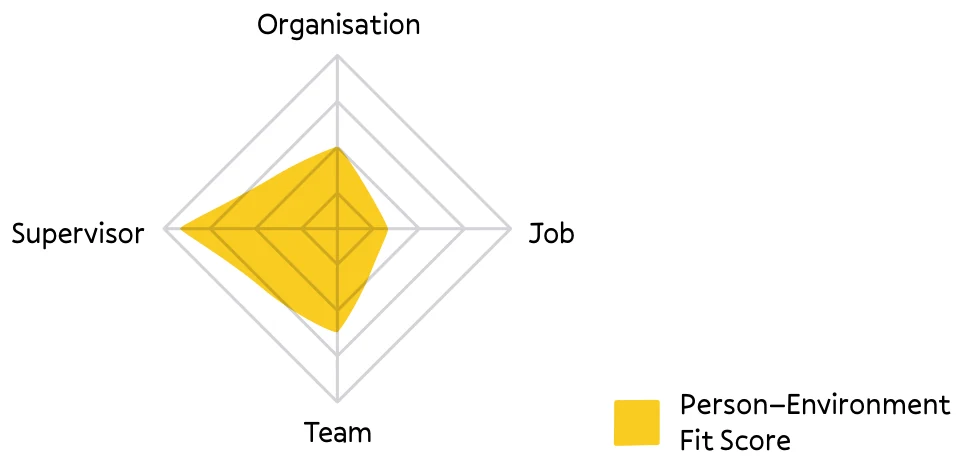
Using the optimistic approach, the overall rating for this Fitness Radar example is 0.575, calculated by averaging the ratings for the four dimensions. Conversely, the pessimistic rating is determined by selecting the lowest rating among the four dimensions, which in this case is 0.3.
Maximizing Fit for Individuals and Organizations
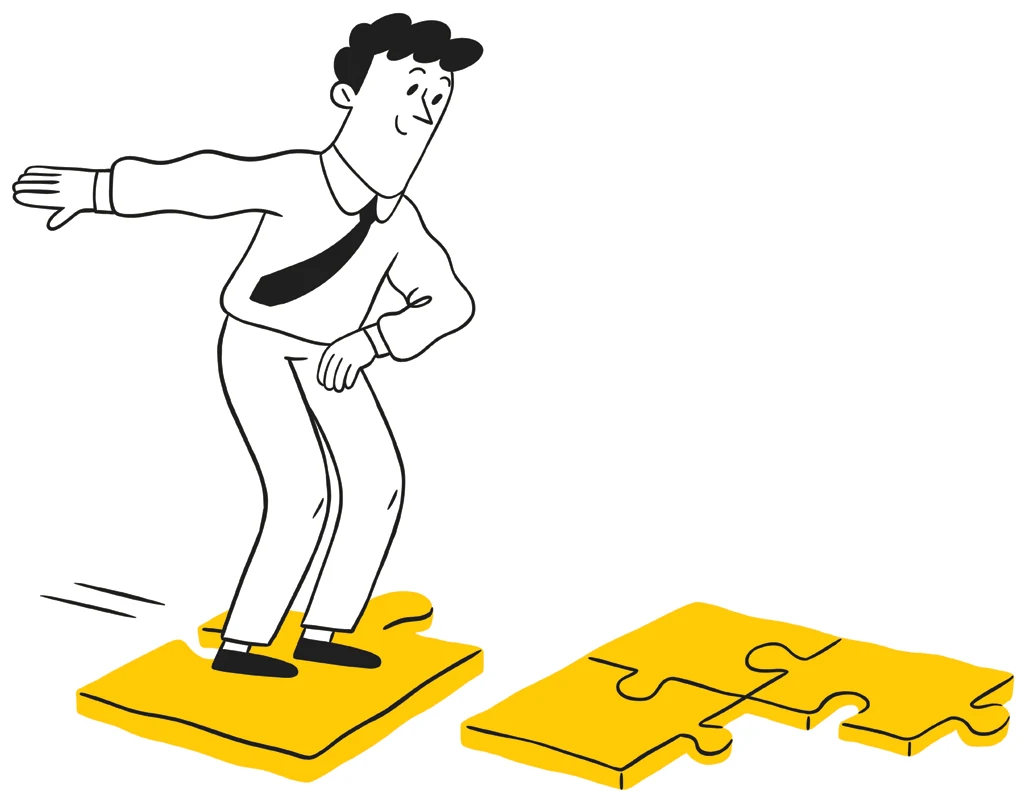
The ultimate goal of every people manager is to continuously maximize these ratings, helping the individuals they care for to find their rightful place within the organization.6
Furthermore, I highly recommend incorporating the Fitness Radar into the selection process. This approach increases the likelihood of choosing the right person and minimizes subsequent challenges for both parties.7 Personally, I would be hesitant to hire someone with a pessimistic rating below 0.5, unless we are intentionally seeking diversification—for instance, when aiming for cultural transformation within the organization and specifically requiring “differently right” individuals.8
References
- A. L. Kristof-Brown and R. P. Guay, “Person–Environment Fit,” in APA Handbook of Industrial and Organizational Psychology, Vol. 3, ed. S. Zedeck (American Psychological Association, 2011), 3–50.
- K. J. Jansen and A. Kristof-Brown, “Toward a Multidimensional Theory of Person–Environment Fit,” Journal of Managerial Issues 18, no. 2 (2006): 193–212.
- P. W. Hom, T. W. Lee, J. D. Shaw, and J. P. Hausknecht, “One Hundred Years of Employee Turnover Theory and Research,” Journal of Applied Psychology 102, no. 3 (2017): 530–45.
- M. R. Barrick and L. Parks-Leduc, “Selection for Fit,” Annual Review of Organizational Psychology and Organizational Behavior 6, no. 1 (2019): 171–93.
- D. M. Cable and J. R. Edwards, “Complementary and Supplementary Fit: A Theoretical and Empirical Integration,” Journal of Applied Psychology 89, no. 5 (2004): 822–34.
- Kristof-Brown, A. L., Zimmerman, R. D., & Johnson, E. C. (2005). "Consequences of Individuals' Fit at Work: A Meta-Analysis of Person-Job, Person-Organization, Person-Group, and Person-Supervisor Fit." Personnel Psychology, 58(2), 281-342.
- F. L. Schmidt and J. E. Hunter, “The Validity and Utility of Selection Methods in Personnel Psychology: Practical and Theoretical Implications of 85 Years of Research Findings,” Psychological Bulletin 124, no. 2 (1998): 262–74.
- S. E. Page, The Diversity Bonus: How Great Teams Pay Off in the Knowledge Economy (Princeton University Press, 2019).
From Never Stop Experimenting by Stavros Stavru, PhD, illustrated by Iva Grueva. Published here in full on .
How to cite this technique
Stavru, S. (2025). The Fitness Radar. In Never Stop Experimenting: 31 Real-World Experiments for Continuous Growth in Work and Life. Morgan James Publishing. https://neverstopexperimenting.com/techniques/fitness-radar
Related techniques
08 · Leadership & teams
The Team Strategy Matrix
Uncover the best way to manage your team.
09 · Leadership & teams
The Manager’s Dilemma
When given the choice, do you favor individual superstars or a cohesive super team?
10 · Leadership & teams
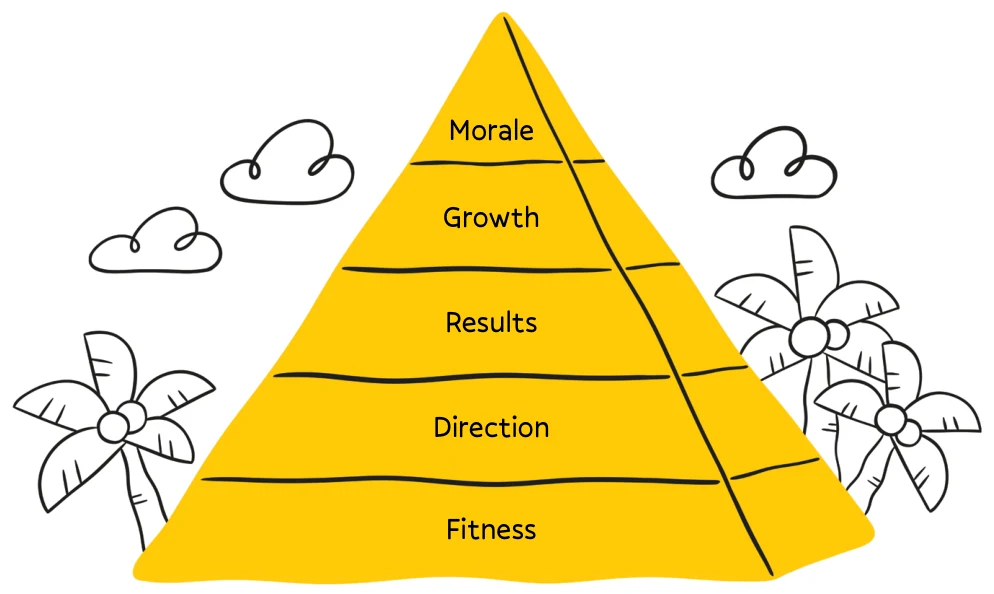
The Care Meter
Gauge your adequacy in providing care for others.
12 · Leadership & teams
The Functional Domino
Determine the best-suited role for each person in your organization.
13 · Leadership & teams
The Conflicts Strainer
Identify and prioritize conflicts that truly require attention.
14 · Leadership & teams
The Power Circles
Master the art of effectively blending various forms of power.
One new experiment, now and then
New techniques, real-world results and behind-the-scenes stories from Stavros. No spam; unsubscribe anytime.