Part VII
Retrospectives and Continuous Improvement
A retrospective that works when time and energy are short, a way to match the reflection to your team’s stage and a quick check of how others saw your initiative.
Which technique for which situation?
| If… | Try |
|---|---|
| You have 15 minutes, or a team that has stopped engaging in retros | The Rocket RetrospectiveConduct retrospectives in time-constrained and low-engagement situations. |
| You want each retrospective to fit where your team is now | The Teaming WheelChoose a team reflection that meets your current stage of development. |
| You want to know whether a meeting, training or event was worth it | The Replay CheckDetermine the extent to which others are pleased with the outcomes of your initiative. |

Technique 29
The Rocket Retrospective
Conduct retrospectives in time-constrained and low-engagement situations.
The Rocket Retrospective is a strictly timeboxed 15-minute retrospective for teams short on time or engagement. In three five-minute phases, people report on the task they took last time, anonymously write one thing to strengthen or weaken in the team, then each draws a random note and owns it as their improvement task until the next session.
- Quick Reflection
- Action-Oriented
- Low Resistance

Technique 30
The Teaming Wheel
Choose a team reflection that meets your current stage of development.
The Teaming Wheel matches a team’s retrospective to its stage of development (forming, storming, norming, performing or adjourning). Its fifteen focus areas, from closeness and trust to innovation and gratitude, are grouped in five coloured zones. The Teaming Scan, twelve questions rated 1 to 10, finds the first area scoring 5 or less to reflect on next.
- Team Development
- Intentional Growth
- Adaptive Teaming
Technique 31
The Replay Check
Determine the extent to which others are pleased with the outcomes of your initiative.
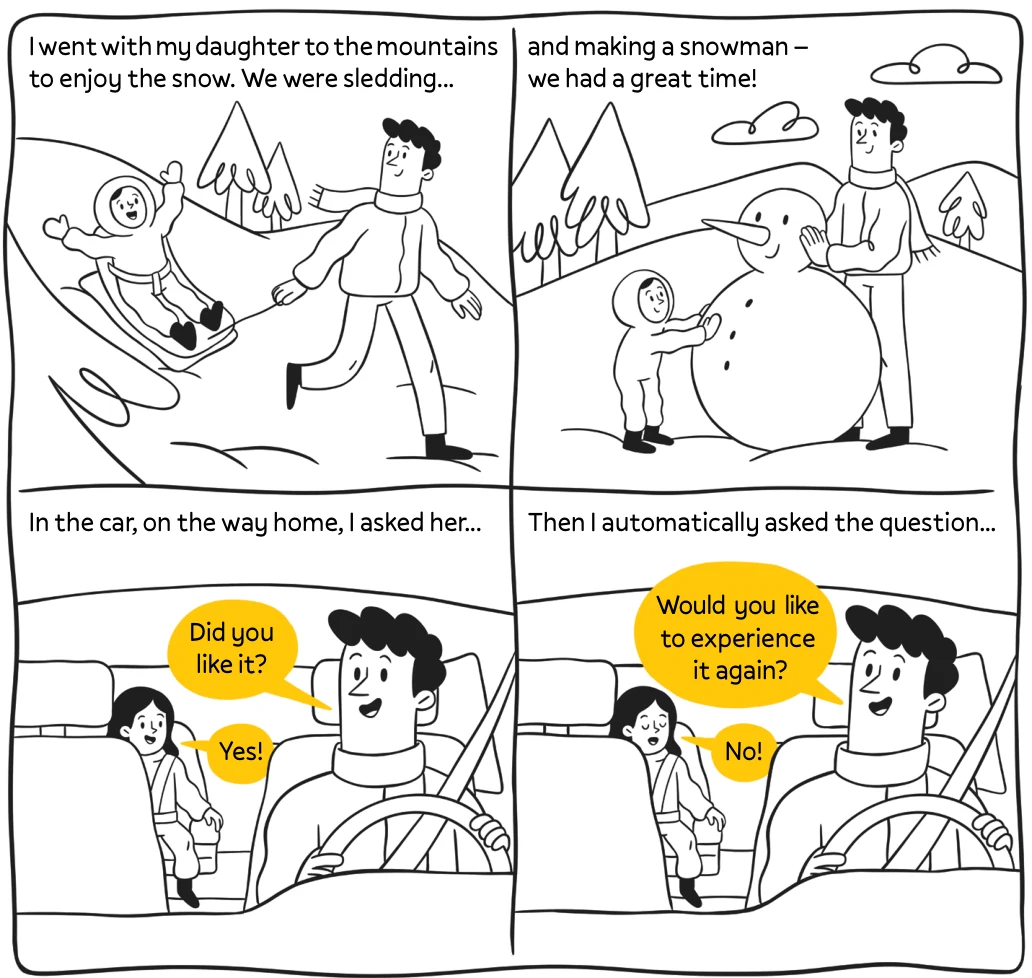
The Replay Check measures how satisfied people are with a meeting, training or initiative by asking whether they would choose to repeat it, not whether they would recommend it as the Net Promoter Score does. People answer on a 0–100% scale, which exposes Promoters who value an event for others but got little from it themselves.
- Satisfaction Measurement
- Event Evaluation
- Feedback