Technique 26 of 31
The Stress Reflector
Unveil the inner workings of stress and uncover a viable, long-term coping strategy.
- Stress Management
- Self-Awareness
- Coping Strategies
In short
The Stress Reflector helps teams find where stress comes from (body, heart, head, desire or fate), decide whether the inner eye or an outer eye sees it best, and pick a matching coping strategy. Five yes-or-no questions each point to two strategies, such as escape or adaptation, rest or recovery.
For: Agile teams, team leads and individuals under stress
The Problem
Stress isn’t just tension—it’s a force that can drive growth or derail teams.1 Agile teams, constantly adapting to change, feel this acutely.2 But if stress isn’t managed effectively, it can lead to burnout, distraction, or dysfunction.3 Since stress is inevitable, teams need a way to harness it rather than be overwhelmed by it.
The Experiment
Rather than trying to eliminate stress, I collaborated with teams to explore ways to harness it. This led to the development of the Stress Reflector—a tool that helps teams identify stressors, recognize patterns, and develop practical coping strategies. By shifting focus from avoidance to adaptation, teams learned to use stress as a driver for growth and resilience.4
What Might Be the Underlying Source of Stress?
Please bear in mind that the root causes I have uncovered, based on my personal experiences and extensive work with Agile teams, represent just a starting point in understanding the intricate web of stress. While not exhaustive, these causes have frequently emerged as the underlying sources of tension within the workplace.
Stress originating from the body

Fatigue, illness, physical strain, disrupted sleep patterns, and an unhealthy diet can serve as the foundation for stress.5 Often overlooked, these bodily factors may not be immediately recognized as potential triggers.
Stress originating from the heart

The intensity and duration of our emotional experiences can also fuel stress.6 I have encountered individuals who possess heightened sensitivity, emotional vulnerability, and a tendency to internalize and dwell on their feelings. Their emotional responses, which may seem excessive to others, are often the primary culprits. In contrast to the body, this primary source is typically subject to suspicion.
Stress originating from the head

Negative thoughts, cognitive biases, and maladaptive values and beliefs shape our interpretation of events, thereby contributing to stress.7 This root cause proves to be the most challenging to identify, as self-awareness is often limited. Seeking professional assistance from psychologists, psychotherapists, and personal coaches can prove invaluable in navigating this complex terrain.
Stress originating from desire

At the core lies the discord between our needs (e.g., set goals or tasks) and our ability to fulfill them. Insufficient resources, such as knowledge, skills, or financial means, hinder our capacity to meet the expectations placed upon us, be they self-imposed or imposed by others.8
Stress originating from fate

This form of stress arises from our perceived lack of control over our circumstances, coupled with an inability to alter our environment.9 It encompasses the sense of helplessness that accompanies the realization that certain aspects of our situation lie beyond our influence.
What Is Required to Effectively Capture the Presence of Stress?
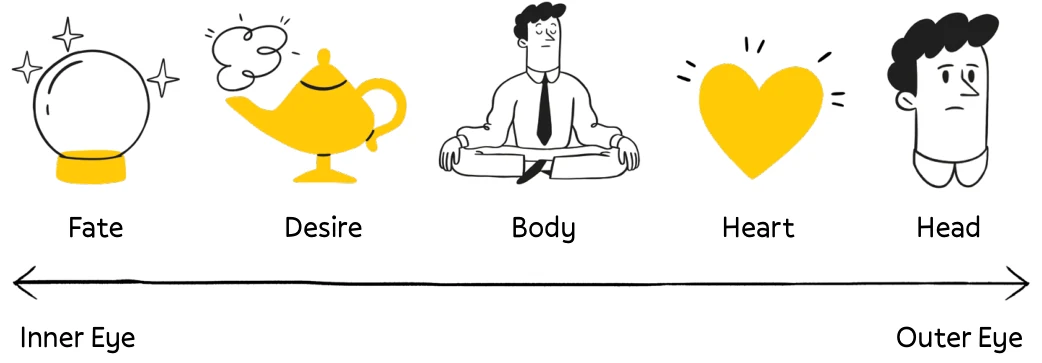
Within the realm of stress, certain root causes are more readily detectable to individuals themselves, while others are better perceived by those around them. This underscores the significance of cultivating two distinct lenses: an inner eye that focuses on our internal sensations and perceptions, and an outer eye that unveils the blind spots visible only to those in our proximity.10 Here, I present my personal observations, highlighting which eye is most adept at capturing specific root causes.
The Inner Eye
Certain root causes manifest with greater clarity within our own awareness. Our task is to nurture our inner eye, enabling us to accurately assess the boundaries of our control, acknowledge when our aspirations surpass our capabilities, and attune ourselves to the messages emanating from our physical being.
The Outer Eye
To recognize sources originating from the heart and head, a heightened level of self-awareness and self-reflection is indispensable. It is invaluable to have an experienced outer eye to guide us on this journey.11
The metaphor of the inner and outer eyes serves as a poignant reminder of the importance of not relying solely on our own faculties when confronting stress. Some elements remain concealed within our blind spots, necessitating assistance.12 In this regard, seeking professional support from psychologists and psychotherapists, who possess the expertise to navigate these unseen realms, proves invaluable.
In essence, effective stress management encompasses the development of self-awareness and self-reflection, as well as the willingness to lean on others who can help shed light on the root causes of stress that may elude our personal view.
What Coping Strategies Are Available for Managing Various Root Causes of Stress?
Gaining a deep understanding of the origins of stress is paramount, as it paves the way for effective coping strategies.13 Throughout my experience, I have witnessed individuals employing the same coping mechanisms regardless of the underlying causes of their tension. However, the truth remains that this approach is ineffective. It’s akin to consistently resorting to the same medication without regard to the diagnosis. That’s precisely why the Stress Reflector not only identifies the root causes of stress but also provides a range of potential coping strategies.
Question No. 1
Do you possess control over the situation?14
Imagine a hypothetical scenario where your organization mandates adoption of new technologies and methodologies that will fundamentally change how your team works.
According to the Stress Reflector, responding negatively to Question No. 1 leads to two potential coping strategies:
Escape

Depart from the situation.
Actively seek opportunities in other departments or companies where you can maintain your preferred working methods.
Adaptation

Embrace the situation and adjust accordingly.
Accept that digital transformation is an industry reality and focus on how you can shape and influence its implementation within your sphere of control.
Question No. 2
Do you possess the necessary resources to meet expectations?15
Let’s continue with the hypothetical scenario where your team needs to transition to cloud-native development and implement AI/ML components but you lack experience in these areas.
According to the Stress Reflector, responding negatively to Question No. 2 leads to two potential coping strategies:
Compromise

Lower your expectations regarding your performance in the situation.
Negotiate a phased implementation approach with reduced initial scope, acknowledging the learning curve.
Growth

Cultivate the necessary resources.
Develop a comprehensive upskilling plan for the team, including training programs, mentorship, and hands-on learning opportunities.
Question No. 3
Is your physical well-being optimal?16
Then the transformation demands longer hours and intense focus while learning new technologies, leading to burnout symptoms.
According to the Stress Reflector, responding negatively to Question No. 3 leads to two potential coping strategies:
Rest

Take a break to rejuvenate and regain energy.
Take short breaks or a few days off to recharge and prevent complete exhaustion.
Recovery

Identify sources of strength and energy or address their underlying deficiencies.
Establish sustainable work patterns, including regular exercise, better sleep habits, and stress-management routines.
Question No. 4
Does my reaction align with that of others?17
Now you find yourself feeling overwhelmingly anxious about the changes while other team leaders seem to be handling them well.
According to the Stress Reflector, responding negatively to Question No. 4 leads to two potential coping strategies:
Relaxation
Diminish the intensity and duration of emotions through relaxation techniques.
Practice quick stress-reduction techniques like deep breathing or short meditation sessions during the workday.
Ventilation

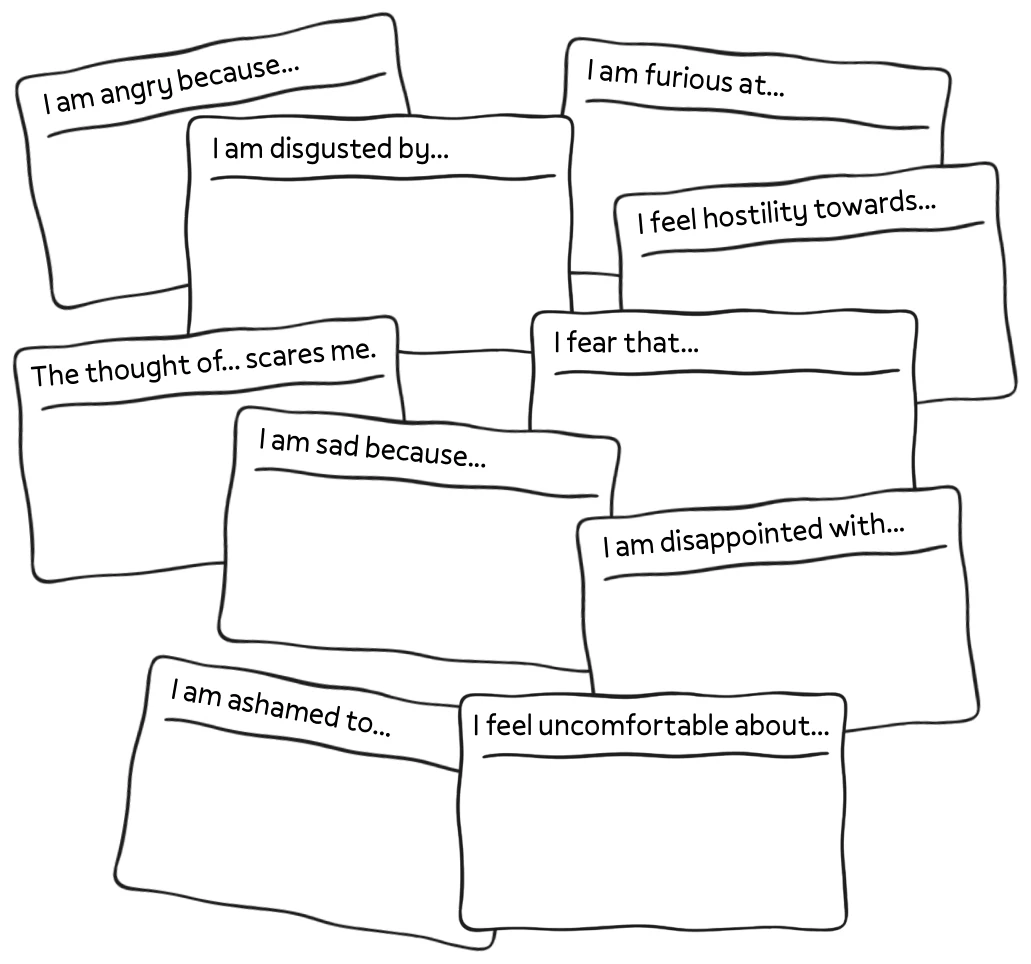
Alleviate the intensity and duration of emotions through venting techniques.
Join leadership peer groups or find a mentor to discuss challenges and learn from others’ experiences with similar transformations.
Question No. 5
Am I misinterpreting the situation?18
And finally, you’re catastrophizing about potential failure and its impact on your career.
According to the Stress Reflector, responding negatively to Question No. 5 leads to two potential coping strategies:
Self-awareness

Recognize your thoughts, beliefs, and values.
Document your thoughts and identify when you’re assuming worst-case scenarios without evidence.
Transformation

Transform your thoughts, beliefs, and values.
Work with a professional coach to develop a more balanced leadership mindset and build resilience in facing organizational change.
The Stress Reflector serves as more than just a diagnostic tool—it’s a pathway to sustainable stress management in the ever-evolving landscape of Agile work. By systematically examining each dimension (Body, Head, Heart, Desire, and Fate) through both internal and external perspectives, and applying appropriate immediate and strategic solutions, teams can build resilience over time.
References
- H. Selye, Stress Without Distress (J.B. Lippincott Company, 1974).
- J. Järvinen, A. Mäkikangas, S. Mauno, and U. Kinnunen, “Agile Work and Well-Being,” Journal of Work and Organizational Psychology 35, no. 1 (2019): 1–9.
- C. Maslach and M. P. Leiter, “Understanding Burnout: New Models of Research and Intervention,” Stress and Health 33, no. 5 (2017): 549–51.
- M. M. Tugade and B. L. Fredrickson, “Resilience and Positive Emotions,” Journal of Personality and Social Psychology 86, no. 2 (2004): 320–33.
- B. S. McEwen, “Neurobiological and Systemic Effects of Chronic Stress,” Chronic Stress 1 (2017): 2470547017692328.
- J. J. Gross, “Emotion Regulation: Current Status and Future Prospects,” Psychological Inquiry 26, no. 1 (2015): 1–26.
- A. T. Beck and D. J. Dozois, “Cognitive Therapy: Current Status and Future Directions,” Annual Review of Medicine 62 (2011), 397–409.
- E. Demerouti, A. B. Bakker, F. Nachreiner, and W. B. Schaufeli, “The Job Demands-Resources Model of Burnout,” Journal of Applied Psychology 86, no. 3 (2001): 499–512.
- J. B. Rotter, “Internal Versus External Control of Reinforcement: A Case History of a Variable,” American Psychologist 45, no. 4 (1990): 489–93.
- T. Eurich, Insight: The Surprising Truth About How Others See Us, How We See Ourselves, and Why the Answers Matter More than We Think (Crown Business, 2018).
- A. Sutton, “Measuring the Effects of Self-Awareness,” Europe’s Journal of Psychology 12, no. 4 (2016): 645–58.
- S. Vazire and E. N. Carlson, “Others Sometimes Know Us Better than We Know Ourselves,” Current Directions in Psychological Science 20, no. 2 (2011): 104–108.
- S. Folkman and J. T. Moskowitz, “Coping: Pitfalls and Promise,” Annual Review of Psychology 55 (2004), 745–74.
- R. A. Karasek, “Job Demands, Job Decision Latitude, and Mental Strain: Implications for Job Redesign,” Administrative Science Quarterly 24, no. 2 (1979): 285–308.
- S. E. Hobfoll, “Conservation of Resources Theory: Its Implication for Stress, Health, and Resilience,” in The Oxford Handbook of Stress, Health, and Coping, ed. S. Folkman (Oxford University Press, 2011), 127–47.
- S. Sonnentag and C. Fritz, “Recovery from Job Stress: The Stressor-Detachment Model as an Integrative Framework,” Journal of Organizational Behavior 36, no. S1 (2015): S72–S103.
- L. Festinger, “A Theory of Social Comparison Processes,” Human Relations 7, no. 2 (1954): 117–40.
- A. T. Beck, Cognitive Therapy and the Emotional Disorders (International Universities Press, 1976).
From Never Stop Experimenting by Stavros Stavru, PhD, illustrated by Iva Grueva. Published here in full on .
How to cite this technique
Stavru, S. (2025). The Stress Reflector. In Never Stop Experimenting: 31 Real-World Experiments for Continuous Growth in Work and Life. Morgan James Publishing. https://neverstopexperimenting.com/techniques/stress-reflector
Related techniques

25 · Stress & well-being
The Lottery Check
Assess the contentment of the individuals you lead.
27 · Stress & well-being
The Ventilation Box
Help people cope with their negative emotions during change.

28 · Stress & well-being
The Engagement Pentagram
Foster a deep emotional connection between individuals and their team and organization.
06 · Personal growth
The Forever Check
Evaluate the long-term viability of your current routines.

07 · Personal growth
The Self-Esteem Wheel
Gauge your positive self-perception.
One new experiment, now and then
New techniques, real-world results and behind-the-scenes stories from Stavros. No spam; unsubscribe anytime.